
What Is an Omamori? — Meaning, Types, and Japanese Traditions
In Japan, a small omamori may express a wish for health, success, safety, or protection. Beyond the familiar colorful fabric pouch, it may also remind someone of a person or a hope they hold dear.
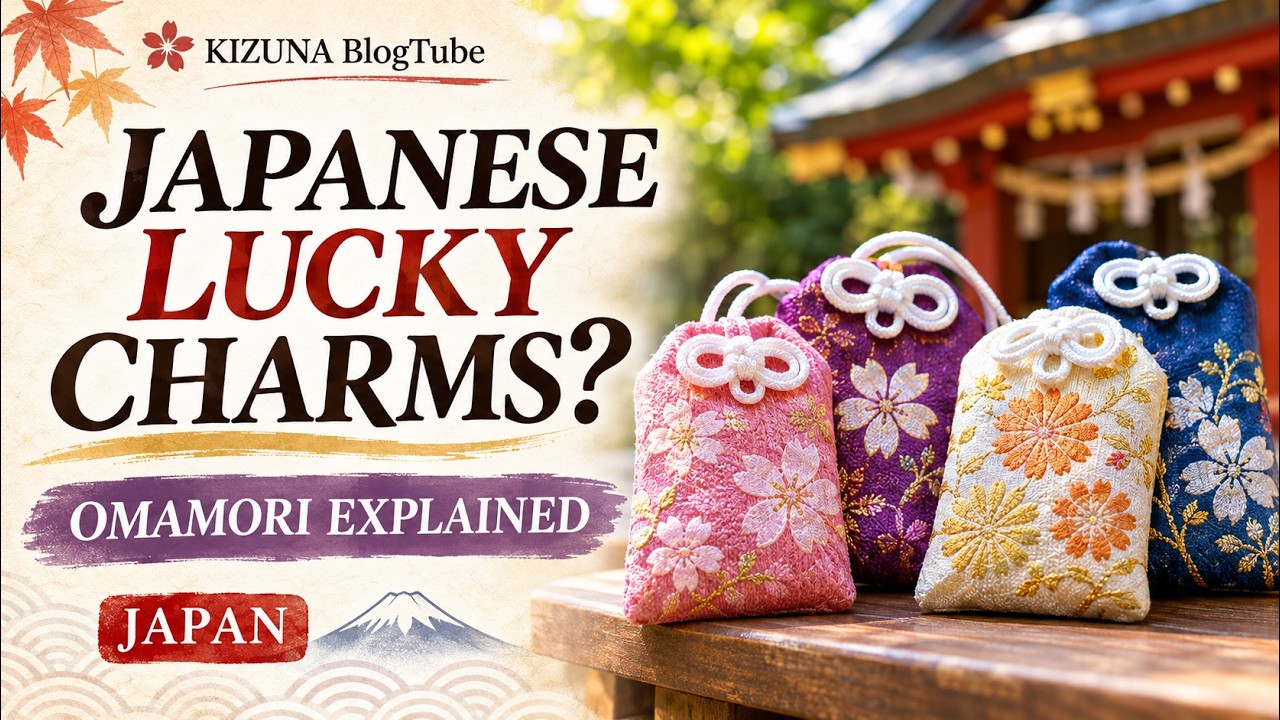
If you have visited a shrine or temple in Japan, you may have noticed small, colorful fabric charms displayed in neat rows.
These are called omamori (お守り).
Some are meant for health, others for success in examinations, safe travel, or protection from misfortune.
People carry them in their bags, attach them to their belongings, or give them to someone they care about.
An omamori is a Japanese protective amulet traditionally received at a Shinto shrine or Buddhist temple. It represents a prayer or wish for protection, well-being, or good fortune.
But behind these small charms lies something more personal.
Why do people carry them? What do the different kinds mean? And can something as ordinary as a letter or a fallen leaf become a personal kind of omamori?
To understand these questions, let's begin with the meaning of the word itself.
What Is an Omamori?
The Meaning of Omamori
The word omamori comes from the Japanese verb mamoru (守る), meaning “to protect.”
The o at the beginning is an honorific prefix, giving the word a respectful tone.
Omamori are often translated into English as “good-luck charms.” This is a useful translation, but it does not explain everything.
Some omamori are associated with attracting good fortune or achieving a particular goal. Others express wishes for protection from illness, accidents, or misfortune. In many cases, protection is just as important as the hope for success.
More Than a Decorative Charm
A traditional omamori often takes the form of a small cloth pouch, sometimes decorated with woven patterns.
Inside may be a sacred paper or wooden talisman, depending on the shrine or temple and the type of omamori. The contents are generally kept enclosed rather than opened for inspection.
Omamori can also take other forms, so not every one looks like a fabric pouch.
Although their designs may be attractive, their religious significance is not simply decorative. For people who receive them as objects of faith, they are associated with prayers and protection.
Different Types of Omamori and Their Meanings
One of the interesting things about omamori is the variety of wishes they represent. Different shrines and temples offer different types, and some have charms connected to their own history or religious traditions.
Here are six commonly encountered purposes:
| Japanese | Romaji | Meaning |
|---|---|---|
| 健康守 | Kenkō Mamori | Health and Well-Being |
| 学業成就 | Gakugyō Jōju | Academic Success |
| 交通安全 | Kōtsū Anzen | Traffic Safety |
| 縁結び | Enmusubi | Relationships and Connections |
| 厄除け | Yakuyoke | Protection from Misfortune |
| 家内安全 | Kanai Anzen | Family Safety |
Health and Well-Being. Health-related omamori express wishes for good health or recovery. They may be received for oneself or for a family member.
Academic Success. These omamori are especially familiar around entrance examination periods. Students or their families may receive them while hoping for success in their studies.
Traffic Safety. Traffic-safety charms are associated with protection from accidents. Some people keep them in their cars or carry them during their daily travels.
Relationships and Connections. Enmusubi is often associated with love and marriage, but the Japanese word en can also refer more broadly to meaningful connections between people.
Protection from Misfortune. Yakuyoke omamori express prayers for protection from misfortune or harmful influences.
Family Safety. These charms represent wishes for the safety and well-being of the household.
The names, designs, and specific purposes vary from place to place. What connects these different omamori is that each reflects something a person hopes to protect or achieve.

Omamori at Shinto Shrines and Buddhist Temples
Where Omamori Come From
Omamori are commonly found at both Shinto shrines and Buddhist temples.
Although the two religious traditions are different, both have long been part of Japan's cultural and spiritual life.
At Shinto shrines, omamori are associated with the protection and blessings of the kami, the divine beings honored in Shinto.
At Buddhist temples, protective charms may be connected with Buddhist figures, prayers, and the religious practices of the particular temple.
Their meanings and forms are not identical everywhere. It is therefore best to understand an omamori in the context of the shrine or temple from which it comes.
Receiving an Omamori
In everyday English, people might say they “buy” an omamori. In Japanese, however, people also commonly use expressions meaning “to receive” an omamori.
At a shrine, the amount offered when receiving one is often understood as an offering rather than simply a retail price. This distinction reflects its religious character.
Visitors may appreciate the craftsmanship and appearance of an omamori, but it is also important to recognize its meaning as a sacred object within the place where it is offered.
How Are Omamori Used in Everyday Japan?
Omamori are usually small enough to carry. Some people attach them to their bags, while others keep them in a wallet, pencil case, or another personal belonging.
They can be especially meaningful during important moments in life.
A student preparing for an examination might carry an academic-success omamori. Someone beginning a new job might receive one associated with good fortune or success. A person planning a journey might take along a charm for travel safety.
Omamori are also sometimes given as gifts.
A parent may give a child an omamori before an important examination. A friend might offer one to someone about to begin a new chapter in life.
In these situations, the person receiving the charm is not always the person who originally made the wish. The omamori can become a way of expressing care for another person.
Of course, not everyone in Japan has the same relationship with omamori. Some people regard them as important religious objects. Others may keep them because they were gifts from someone close, or because they remind them of a particular journey or experience.
These different relationships can exist alongside one another.
How to Care for and Return an Omamori
Should You Open an Omamori?
Traditional pouch-style omamori are generally meant to remain closed. Because they may contain a sacred talisman or other religious item, opening them simply out of curiosity is usually discouraged.
Keeping an omamori clean and handling it respectfully are sensible ways to care for it.
Can You Carry More Than One Omamori?
There is a saying sometimes heard in Japan that carrying charms from different shrines might cause the gods to quarrel.
However, the Association of Shinto Shrines in Japan explains that there is no need to worry about this. In Shinto belief, many kami are honored, and receiving omamori associated with different kami is not considered a cause for conflict.
There is also no simple rule that having more charms automatically brings more protection or good fortune.
That is one possible interpretation, rather than an established explanation of where the saying originated.
An omamori does not need to become a competition over how many wishes a person can collect. The wishes represented by each charm may be more meaningful than the number of charms someone owns.
When Should You Return an Omamori?
Many people return their omamori after about a year, often around the New Year, and receive a new one. However, this is not an absolute expiration date.
The Association of Shinto Shrines also explains that an omamori may be kept until the wish associated with it has been fulfilled.
Old omamori are commonly returned to the shrine or temple where they were received. They may then be handled through an appropriate religious ceremony or ritual disposal.
If returning to the original location is difficult, it is best to ask another shrine or temple whether it accepts them, rather than assuming every location follows the same rules.
The important point is to treat the omamori with respect, even when it is no longer being carried.
The Wishes We Carry — More Than Good Luck
So far, we have looked at what omamori are, where they come from, and how they are used.
But there is another side to them worth considering.
Imagine a parent giving an academic-success omamori to a child before an important examination.
The charm expresses a wish for success. Yet it may also carry something that is difficult to put into words: encouragement, concern, and the hope that the child will be well, whatever the result.
Or imagine someone receiving a traffic-safety omamori from a family member before a long journey.
The object is small, but it may remind that person of someone waiting for their safe return.
These are examples of how omamori can become connected with relationships between people.
For some, the religious meaning is central. For others, the memory of the person who gave the charm may be equally important.
Neither experience needs to represent everyone in Japan. And an omamori does not have to carry a dramatic story.
It may simply be something a person has kept in a bag for years, a quiet reminder of a wish once made.
In this way, an omamori can represent not only what we hope will happen, but also what we already consider precious.

Can an Ordinary Object Become a Personal Omamori?
A Letter, a Small Gift, or a Fallen Leaf
When speaking about omamori in a religious context, we usually mean protective objects received at shrines or temples.
But the Japanese word can also have a broader meaning.
The New Encyclopedia of Jōdo Buddhism (Shinsan Jōdoshū Daijiten) describes omamori as objects carried for protection. In its broader explanation, it includes portable objects such as branches, hair, and coins.
This shows that the idea of a protective object has not always been limited to the familiar cloth pouch.
There is also a more personal way to think about something being like an omamori.
Consider a letter written by a parent. Someone might fold it carefully, place it in a wallet, and carry it during difficult times.
Or a small gift from an old friend might become a reminder of a relationship that remains important even after many years.
Perhaps a person picked up a fallen leaf on a memorable day and decided to keep it. The leaf itself may have no recognized religious significance. But if it reminds that person of a meaningful moment, it could become a small source of comfort.
These are possibilities, not a claim that carrying ordinary letters or fallen leaves is a widespread Japanese religious custom.
What Makes an Object Precious?
A personal keepsake is not the same as a sacred omamori received from a shrine or temple. Their origins, religious meanings, and ways of being treated can be quite different.
It would be misleading to suggest that every cherished object has the same spiritual meaning.
Still, there is a connection worth noticing.
A religious omamori may represent a prayer for protection. A personal keepsake may hold a memory, a relationship, or a promise.
What gives these objects significance is not always obvious from their appearance. A simple piece of paper might mean very little to a stranger, yet be deeply important to the person carrying it.
That difference is part of what makes the idea of a personal omamori interesting. It leaves room for different people to find meaning in different things.
Conclusion — A Small Reminder of What Matters
Omamori are a familiar part of Japanese religious and cultural life.
They come in many forms, representing wishes for health, safety, success, and protection. They may be received for oneself or given to someone else as an expression of care.
And beyond traditional religious charms, the broader idea of an omamori can invite us to consider the ordinary objects people treasure for personal reasons.
Not everyone understands or values these objects in the same way.
But behind a small charm, a carefully saved letter, or a meaningful keepsake, there may be a wish, a memory, or someone important.
Sometimes, a small object can hold a meaning far greater than its size.
Continue Exploring Japan with KIZUNA
Japanese words often carry shades of meaning that are difficult to express in a single English translation.
Explore the language, everyday expressions, and ideas behind the words on our Japanese Learning Blog.
The Kizuna Connecting with Japan channel shares quiet videos about the habits, customs, and small details of life in Japan.
Explore the Everyday Japan series to discover more.

KIZUNA BlogTube turns our Japanese culture and language articles into videos with clear English narration and simple visuals.
Explore more narrated articles through the channel's playlists.

Explore Japanese ways of seeing through quiet digital reading from KIZUNA.
Featured booklet: Wabi-Sabi – already in your life (Full Edition), a bilingual reflection on imperfection, age, and everyday beauty.




 Posts


No comments:
Post a Comment