
Objects That Think — What Japanese Tools Teach Us About Living
We live in an age of unprecedented convenience. We are surrounded by tools designed to save time, reduce effort, and provide instant results. Yet, in this rush for efficiency, have we lost the "touch" of something essential? Do we feel more restless despite having everything at our fingertips?
This March, we have journeyed through the quiet world of Japanese objects and spaces—from the edge of a chef’s knife to the stillness of a Tatami floor. These are not merely functional items; they are "objects that think." They do not just serve us; they question us. They ask: How do you intend to live?
As we close this series, let us revisit the fragments of wisdom these tools have offered us.
Contents
- The Power to Reveal, Not Conquer
- Precision Born from Compassion
- The Sacredness of the Threshold
- Preparing is a Form of Hope
- The Beauty of the Scar
- The Architecture of Your Center
- Conclusion: Tools as a Punctuation in Life
The Power to Reveal, Not Conquer
Our journey began with the Wa-Bocho (Japanese knife). While many blades are designed to "conquer" ingredients through force, the Japanese blade is crafted to "reveal" their essence. It respects the cellular structure of the food, allowing its true flavor and life to emerge.
Sharpening a blade is not just about maintenance; it is a ritual of sharpening one’s own focus and boundaries. It teaches us that to interact with the world truly, we must first sharpen our own intent.
"Do you seek the power to dominate your surroundings, or the sharpness to reveal their hidden truth?"
→ Deepen your thought: Wa-Bocho — The Blade of Revelation
Precision Born from Compassion
We then looked at the act of "Cutting Without Violence." In Japanese craftsmanship, extreme sharpness is a form of kindness. A dull blade tears; a sharp blade glides. It opens a path without causing unnecessary trauma to the material.
This philosophy suggests a way of being: that true strength does not require aggression. It is the quiet precision of someone who deeply understands the "distance" between themselves and others.
"Is your strength a force that breaks, or a gentleness that knows exactly where to touch?"
→ Deepen your thought: Cutting Without Violence
The Sacredness of the Threshold
Before entering any meaningful space, there is the act of Purification. The simple ritual of washing hands or tidying an entrance is not about hygiene alone—it is about creating "void" in the heart. It is the realization that we cannot receive anything new if we are already full of the world’s noise.
"What are you carrying that prevents you from truly entering the present moment?"
→ Deepen your thought: Why We Purify Before Entering
Preparing is a Form of Hope
In the West, spring is often celebrated only when the flowers bloom. But in Japan, spring is felt in the "Preparing." The tension of a new school year, the buying of a new notebook, the waiting for a bud to open. We learned that the "peak" of an event is only the surface; the real life of the season happens in the quiet work of getting ready.
"Are you so rushed to 'bloom' that you have forgotten the quiet dignity of being 'ready'?"
→ Deepen your thought: Spring is About Preparing
The Beauty of the Scar
When an object breaks, efficiency tells us to replace it. But Kintsugi and the Japanese art of repair tell us to restore it. By mending cracks with gold, the "damage" becomes a story of resilience. The object becomes more beautiful because it has survived, carrying the weight of time within its visible fractures.
"Is your scar a flaw to be hidden, or a golden chapter of your own story?"
→ Deepen your thought: The Philosophy of Repair
The Architecture of Your Center
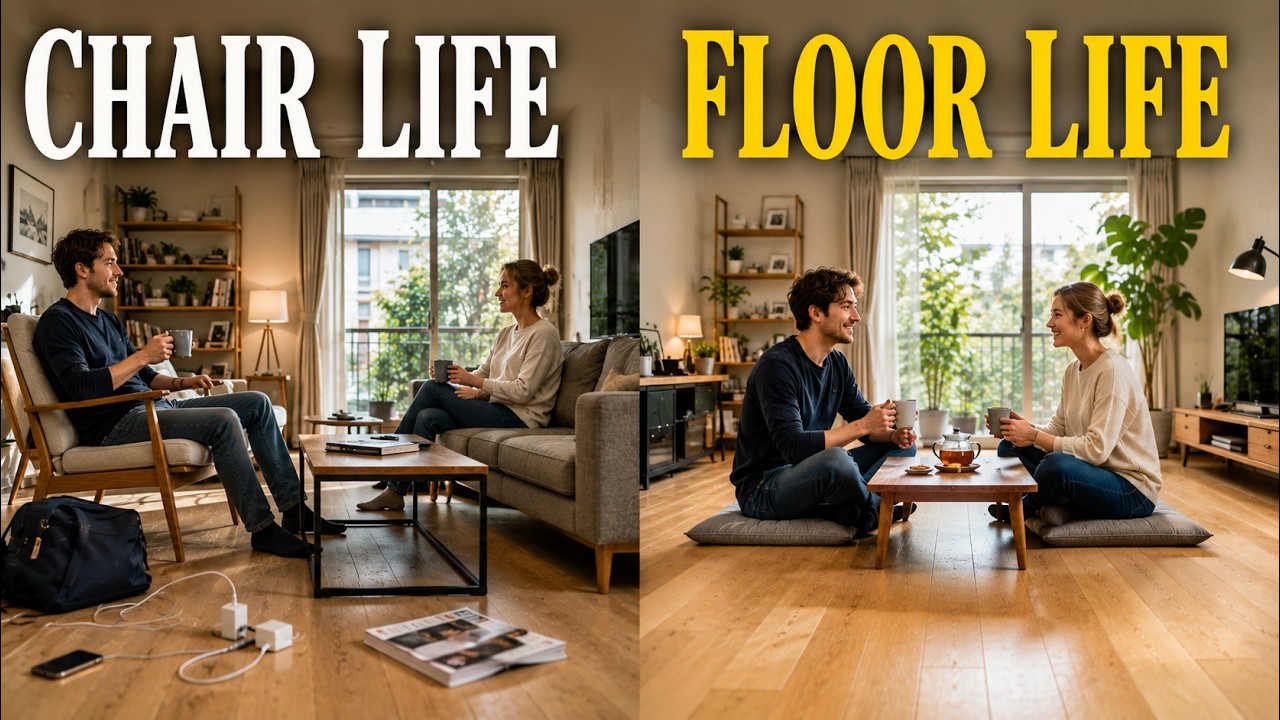
Finally, we stood (or sat) upon the Tatami. This floor is a teacher of posture and "Ma" (the meaningful void). It swallows the noise of the world and asks us to settle our center of gravity. It reminds us that how we inhabit space is a reflection of how we inhabit our own minds.
"In a loud and frantic world, where is your center of gravity right now?"
→ Deepen your thought: Tatami — The Floor of Stillness
Conclusion: Tools as a Punctuation in Life
The objects we have explored this month do not offer easy "hacks" for a better life. Instead, they act as punctuations. They force us to pause, to breathe, and to consider our next movement with intention.
A convenient tool makes us passive. A meaningful tool makes us active—not in the sense of busy-ness, but in the sense of awareness. As we move into a new month, take a moment to look at the tools you hold. Do they simply serve you, or do they help you think?
Perhaps, in the silence of these objects, we find the most honest version of ourselves.
March Series Finale: Objects That Carry Intention
Related Learning Blog
If you're curious about the language behind these concepts, visit our companion blog.



 Posts
Posts


No comments:
Post a Comment